





Different Ways to Remove Debris Before the Pump
Pre-filtration has a simple job: remove debris from the water before it reaches the pump and downstream filtration.
There are several ways to accomplish that. Traditional gravity-fed pond sieves and the HydroSieve™ can both remove suspended debris, but they approach installation, debris collection and routine cleaning very differently.
Understanding those differences can help you choose the pre-filter that best fits your water feature.
Compare the Footprint • Installation • Cleaning • Applications

Compact by Design
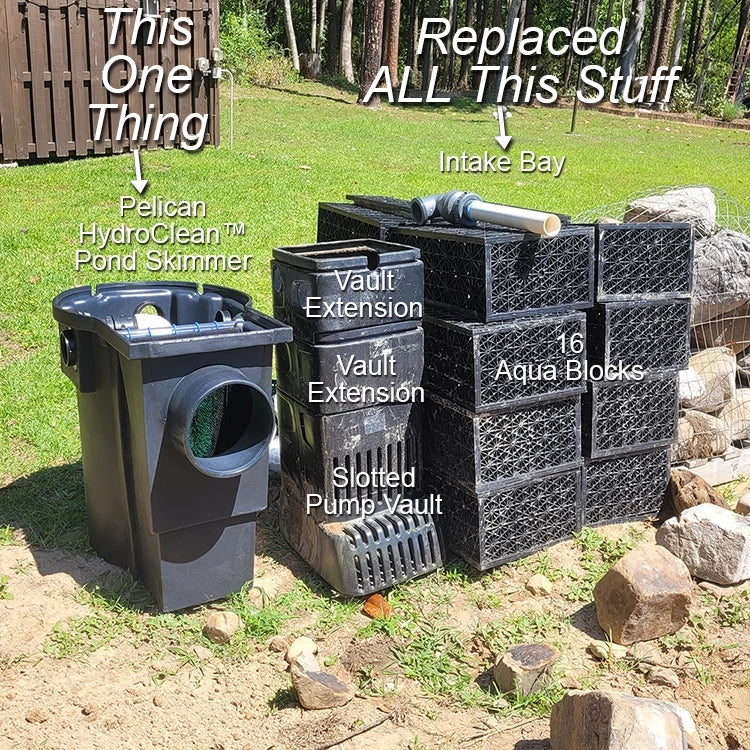
Traditional gravity-fed pond sieves can require a substantial amount of installation space because their physical size.
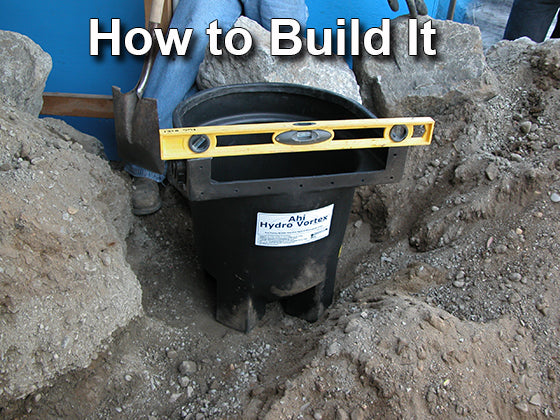
The HydroSieve™ uses a much more compact design and can be installed underground with only its access lid visible.
That smaller footprint provides more flexibility when incorporating filtration equipment into an established landscape or designing a new water feature.
Less equipment competing with the landscape.
Installation Flexibility
One of the biggest differences is where the pre-filter can be located.
The HydroSieve™ uses 4" plumbing connections and can be installed remotely from the water feature, allowing the equipment location to be selected around the landscape and installation requirements.
That can make it possible to place the HydroSieve where it is:
Convenient to Access • Easy to Maintain • Less Noticeable
For many installations, filtration equipment doesn't need to determine what the finished landscape looks like.
The landscape can lead the design.

Compare How They're Cleaned
This may be the most important difference to consider.
Regardless of the type of pre-filter, captured debris eventually has to be removed.
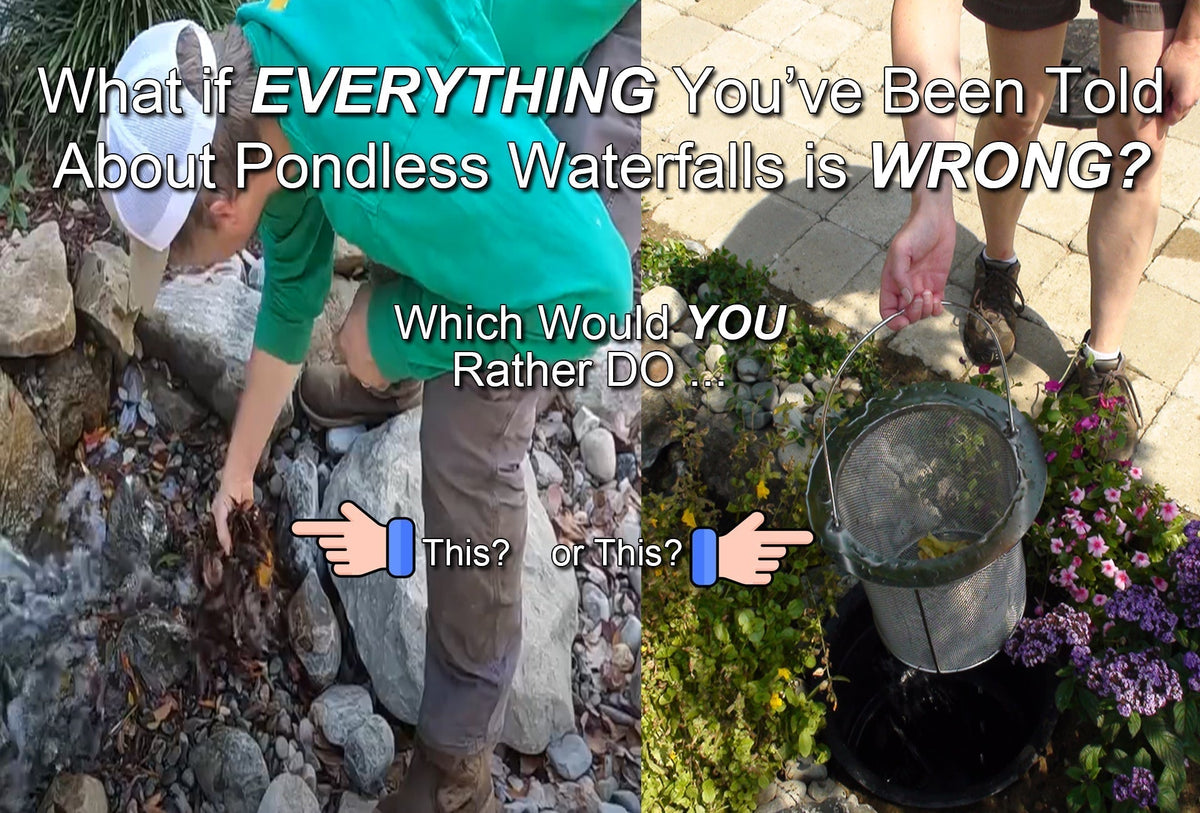
With some pre-filter designs, cleaning requires accessing accumulated material inside the filtration chamber.
The HydroSieve™ collects debris inside a removable 316 stainless steel micro-screen basket. Its basket handle remains accessible from above the water.
Routine cleaning is straightforward:
Lift the Basket → Empty the Debris → Rinse the Screen → Reinstall
There's no need to reach into the bottom of the HydroSieve to remove captured debris by hand.
Dry-Hands™ Cleaning
The debris comes out with the basket.

Compare What Gets Captured
Pre-filters aren't only dealing with leaves.
Water can carry fish waste, blossoms, seeds, feathers, insects, sand and other organic material toward the pump.
The HydroSieve's 316 stainless steel micro-screen basket captures both larger debris and particles as small as grains of sand.
That material is collected in one removable basket before it can continue farther through the system.
Capture it early. Remove it easily. Keep it out of the rest of the system.

One Pre-Filter. Two Applications.
This is another meaningful distinction.
The HydroSieve™ was designed for use as both a:
Koi Pond Bottom-Drain Pre-Filter
and a:
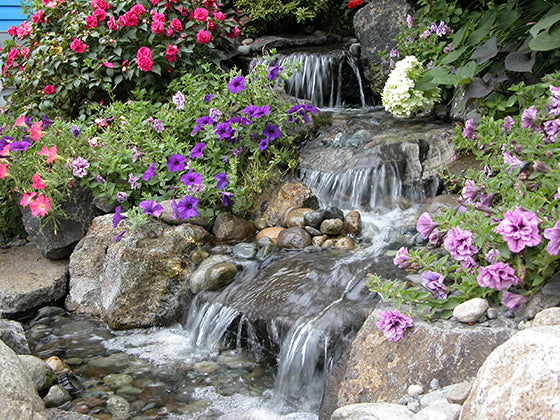
Pondless Waterfall Pre-Filter
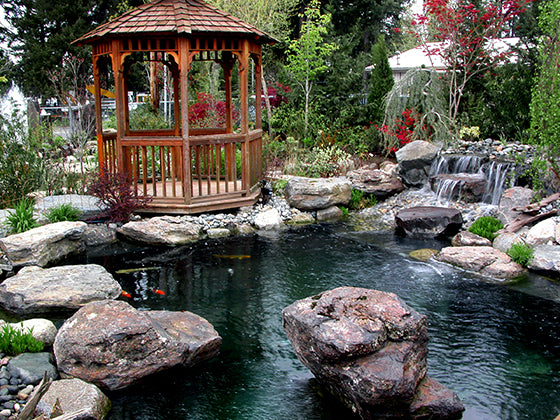
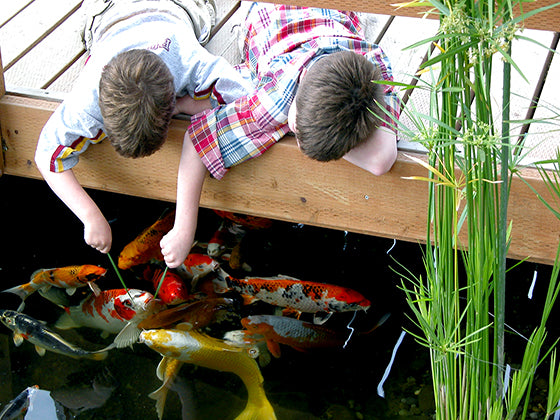
For a koi pond, it can intercept sinking fish waste and organic debris carried through the bottom drain.
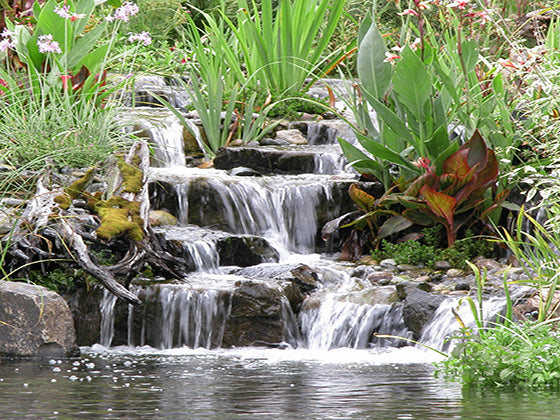
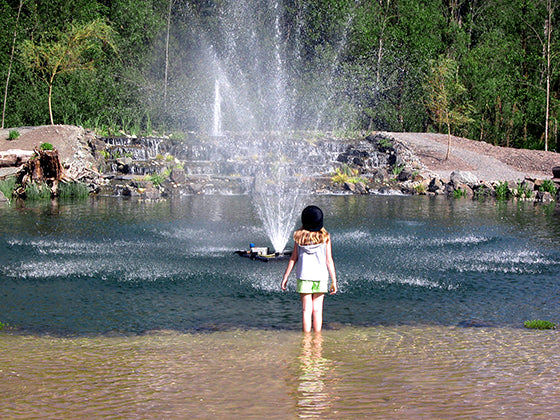
For a pondless waterfall, it can capture leaves, blossoms, seeds, sand and other debris carried downstream by the recirculating water.
One compact pre-filter. Two very different water features.

Compare the Features That Matter
| Before Choosing a Pre-Filter, Compare: | HydroSieve™ |
|---|---|
| Installation footprint | Compact |
| Underground installation | Yes |
| Remote installation capable | Yes |
| Debris collection | Removable stainless steel basket |
| Fine debris capture | As small as grains of sand |
| Routine cleaning | Lift, empty, rinse, reinstall |
| Reach into chamber to remove debris | No |
| Disposable filter pads | None |
| Pond bottom-drain application | Yes |
| Pondless waterfall application | Yes |
| Flow rate | Up to 5,700 GPH |
Before You Buy a Pre-Filter, Ask One Question
Specifications matter.
Flow rate matters.
Price matters.
Installation space matters.
But there's another question you'll appreciate every time the pre-filter needs maintenance:
How Do I Clean It?
Look at how the debris is captured. Look at how you access it. Look at what has to be removed, rinsed or drained. And consider where the equipment will be located after the landscaping is finished.
A pre-filter may be installed once. You'll live with the cleaning process for years..