


The History of Russell Watergardens
From Pond Builders to Water Feature Innovators
Russell Watergardens didn't begin as a product manufacturer.
It began by building ponds and water features.
Founded by John Russell, the business grew from landscape design, installation and maintenance work in the Seattle area into a company specializing exclusively in ponds and water features. By 1997, that specialization had become Russell Watergardens.
Focusing entirely on water allowed us to do something important: learn from every pond and water feature we built, maintained and repaired.
Those lessons would eventually change the direction of the company.
Learning by Building
During the late 1990s and early 2000s, Russell Watergardens became one of the Pacific Northwest's prominent water-feature contractors.
We designed and installed ponds, waterfalls and other water features throughout the region while continually experimenting with construction techniques, filtration systems and new ways of working with water.
Our work received local and national recognition, including a Gold Medal at the Northwest Flower & Garden Show, and Russell Watergardens projects and ideas appeared in industry publications, news stories and videos.
But some of our most valuable lessons didn't come from awards.
They came from maintaining what we built.
Building a water feature teaches you how to make it work.
Maintaining one teaches you whether it was designed well in the first place.
The Russell Watergardens Store
In 2001, we took another major step and opened the Russell Watergardens retail store in Redmond, Washington.
This wasn't a conventional pond store.
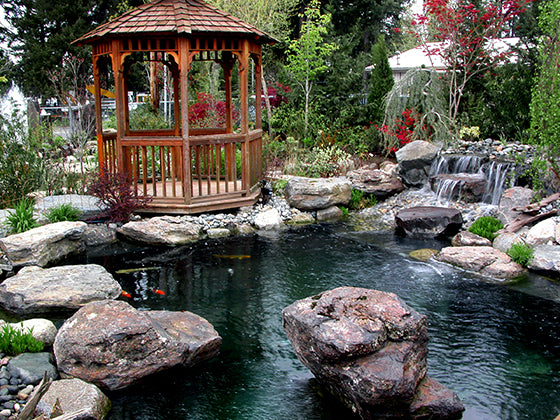
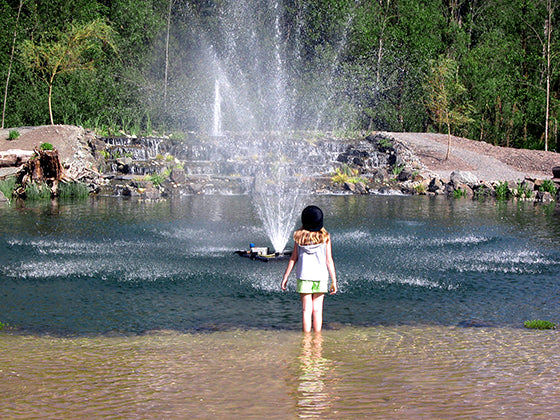
Located on approximately three acres, the property became a destination for people interested in ponds, koi and water features. The grounds contained dozens of operating water displays, including ponds, streams, waterfalls and a large lake-sized display.
Customers could see water-feature equipment actually operating rather than simply looking at products sitting on a shelf.
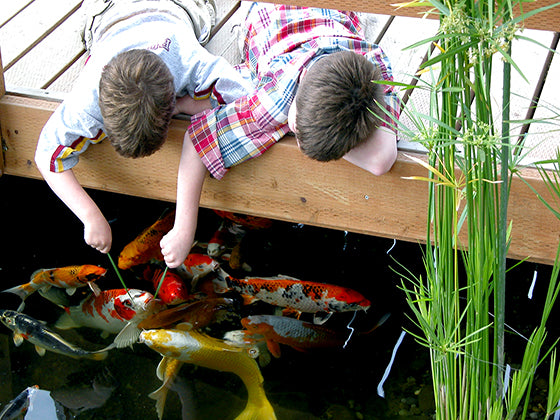
We sold professional-grade pond equipment directly to homeowners and contractors, along with koi, other pond fish and aquatic plants.
We also held regular educational classes where homeowners and professionals could learn how ponds and water features worked and how to build and maintain them.
The store put us in direct contact with an enormous variety of pond owners.
And they asked very good questions.
Our Customers Started Asking “Why?”
As our customer base grew, we kept hearing questions about the pond equipment and construction methods available at the time:
Why is this filter so difficult to clean?
Where does all the debris go?
Why do I have to take the filter apart to clean it?
Why does the entire pond need to be drained for cleaning?
Why do I have to remove the fish first?
Why are special tools required to install this equipment?
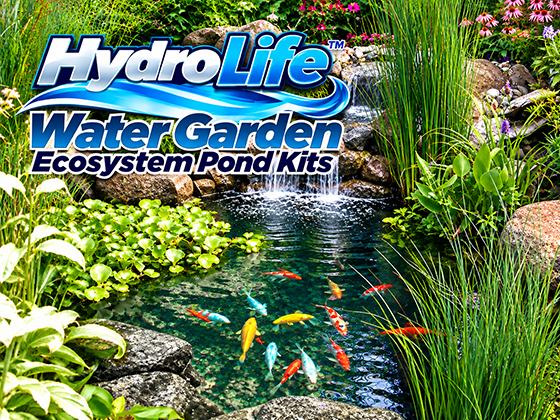
Why can't a pond combine the natural appearance of a water garden with some of the functional advantages of a koi pond?
And perhaps the most important question:
Isn't there a better way?
Those questions became increasingly difficult for us to ignore.
So instead of simply accepting the products and systems available to us, we began testing them.
The Store Became Our Laboratory
Having dozens of operating water features at the Redmond property gave us an unusual opportunity.
We could turn working displays into real-world test systems.
We purchased and installed products from numerous manufacturers and experimented with different combinations of pumps, filters, skimmers, plumbing and filtration media.
We wanted to know more than whether something worked when it was new.
We wanted to know:
How difficult is it to install?
How easy is it to maintain?
What happens as debris accumulates?
What happens during winter?
Which components wear out?
What happens when ordinary homeowners—not professional installers—have to service it?
And we didn't test equipment for a few hours on a workbench.
We could operate it in actual ponds and water features.
We Discovered That Maintenance Matters
One lesson appeared repeatedly:
If something is difficult to clean, it doesn't get cleaned as often as it should.
And when filtration isn't maintained regularly, accumulated organic material doesn't simply disappear.
Water quality can deteriorate. Algae can become more difficult to manage. Fish environments can suffer. And what began as an enjoyable pond or water feature can become an unpleasant maintenance project.
We also found other opportunities for improvement.
Some equipment required specialty installation tools many homeowners didn't own. Some materials didn't hold up as well as we wanted. Some systems were unnecessarily complicated to service. Some required replacement components and media that added to the long-term cost of ownership.
We began looking at products from a different perspective.
Not simply:
Does it work?
But:
What's it like to own?
That question would eventually become one of the guiding principles behind Russell Watergardens product development.
The Beginning of Russell Watergardens Product Development
Once we understood the problems, John began designing solutions.
Research didn't stop with the pond industry. Ideas, materials and technologies from other industries were studied and incorporated where they could improve water-feature equipment.
Prototypes were built.
Then tested.
Changed.
Tested again.
And changed again.
The Redmond displays provided controlled testing environments, while participating customers gave us the opportunity to evaluate designs in real installations.
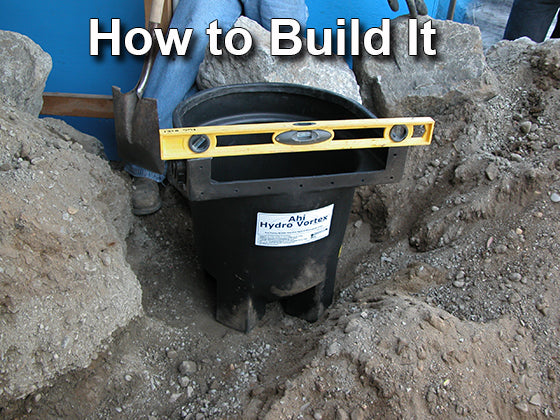
One of the most important products to emerge from that process was the Hydro Vortex™ waterfall filter.
The Hydro Vortex™ Changes the Direction of the Company
The idea behind the Hydro Vortex™ was straightforward:
What if a biological waterfall filter were designed from the beginning to be routinely cleaned and backwashed?
Prototype after prototype was tested until the design performed the way we wanted.
The filtration media could be cleaned without being removed from the filter. The system could be manually rinsed or backwashed. Installation was simplified. Corrosion-resistant stainless-steel and brass hardware was used in critical locations, and the filter included the filtration media required for operation.
The design ultimately became patented.
The original model later became known as the Marlin Hydro Vortex™.
Its success led to the smaller Ahi Hydro Vortex™ and larger Dolphin Hydro Vortex™.
Demand grew quickly.
But something even more important happened.
Customers started asking us to solve other problems.
One Solution Led to Another
If a waterfall filter could be made easier to maintain, customers naturally wondered:
What about the skimmer?
What about koi filtration?
What about pre-filtration?
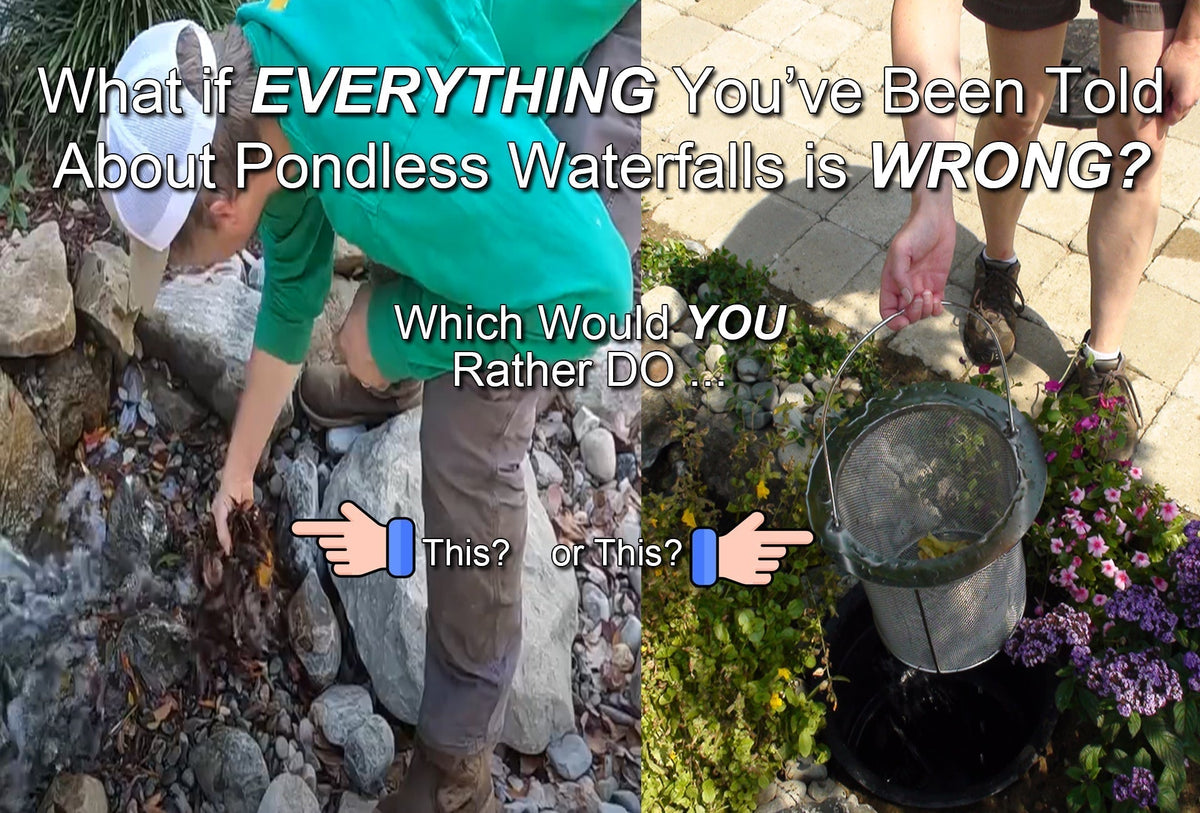
What about pondless waterfalls?
Those questions drove continued research, testing and product development.
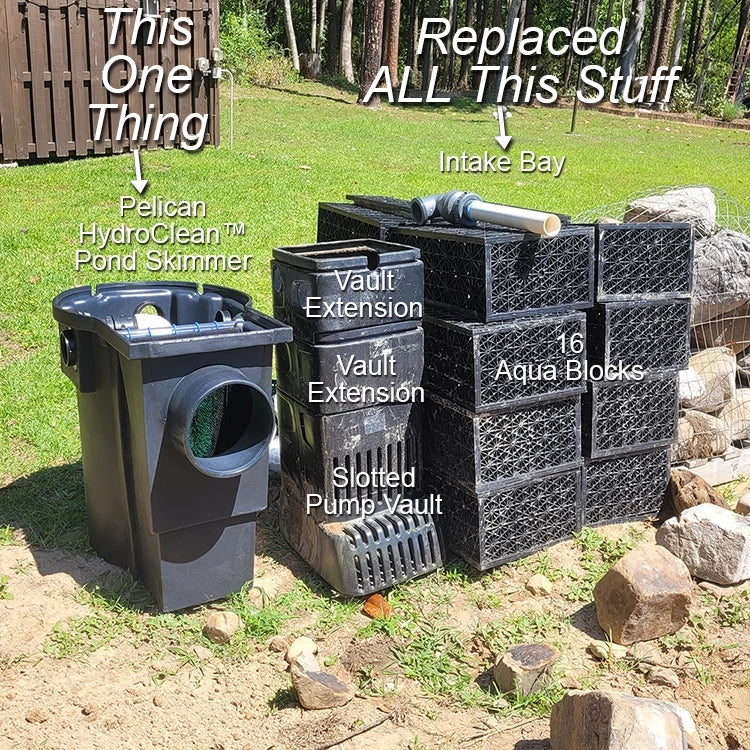
Over time, Russell Watergardens developed products and systems including HydroClean™ pond skimmers, HydroSieve™ pre-filters, HydroBead Vortex™ koi pond filters, HydroChamber™ pump and water-storage chambers, HydroBead™ filtration bio media, FilterSilk™ filtration bio media and other components designed around easier installation and routine maintenance.
Product development also began changing the way we thought about the entire pond, rather than simply individual pieces of equipment.
Rethinking the Pond Itself
Years of building and maintaining ponds convinced us that sometimes the problem wasn't an individual product.
Sometimes it was the way the entire system had traditionally been designed.
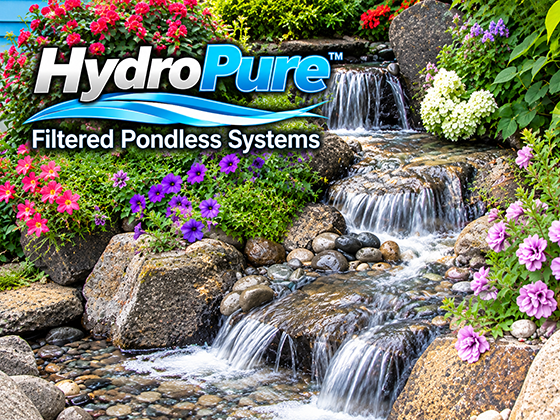
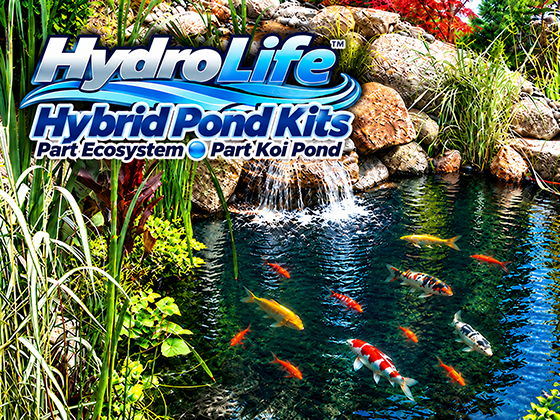
That thinking led John to develop new approaches to pond and water-feature construction, including the Hybrid Pond™, CrossOver Pond™, Bubble-Less Koi Pond™, and new approaches to filtered pondless waterfalls and water features.
Each began with a question.
Can we make this easier to install?
Can we make it easier to clean?
Can we improve circulation?
Can we remove debris before it becomes a problem?
Can we give the homeowner more control?
That process of questioning conventional approaches continues today.
From Local Pond Store to Online Water-Garden Company
As the internet changed the way people researched and purchased pond equipment, RussellWatergardens.com allowed us to help customers far beyond the Pacific Northwest.
The website became more than an online store.
We used it to publish installation instructions, educational articles, videos, comparison information and explanations of different pond and filtration systems.
The goal was the same as it had been in the Redmond store:
Give people enough information to understand what they're buying and why.
Eventually, the physical Redmond retail operation closed and Russell Watergardens relocated to Arizona, transitioning into the online-focused company we are today.
The enormous retail property and dozens of display ponds are gone.
But the lessons we learned from them aren't.
The Business Changed. The Questions Didn't.
Today, Russell Watergardens operates very differently from the company that built ponds throughout the Seattle area decades ago.
We manufacture and distribute specialized pond and water-feature equipment. We ship products to customers across the country. And the internet allows us to teach people we've never met in person.
But we're still asking the same questions we asked while standing beside those ponds in Washington:
Where does the debris go?
How will you clean it?
How easy is the equipment to reach?
Can the owner maintain it themselves?
What will this system be like to own five or ten years from now?
And, most importantly:
Can we make it better?
Those questions took Russell Watergardens from building ponds to designing products and systems of our own.
They continue to guide us today.
Want to Know Why We Design Things Differently?
Our history explains where our ideas came from.
Our philosophy explains why we continue developing products and systems differently today.