




How an Experiment at Russell Watergardens Helped Launch an Entire Water-Feature Category

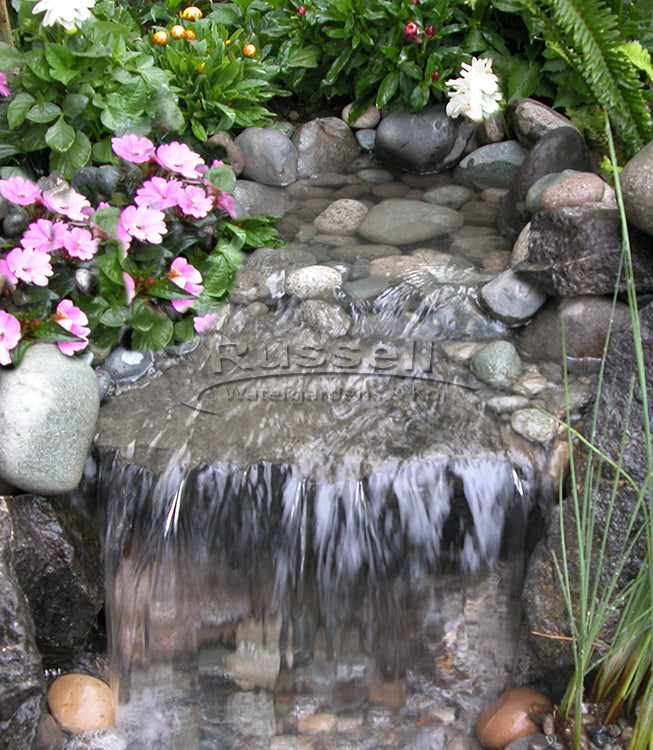
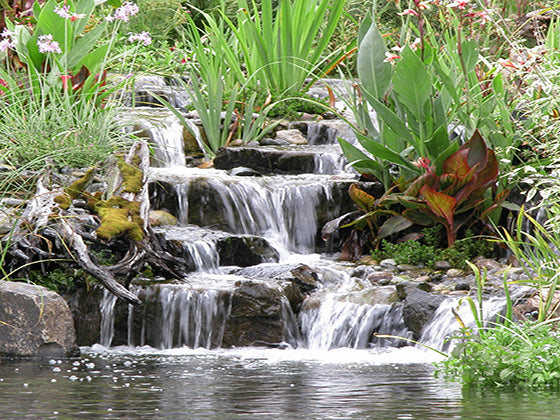
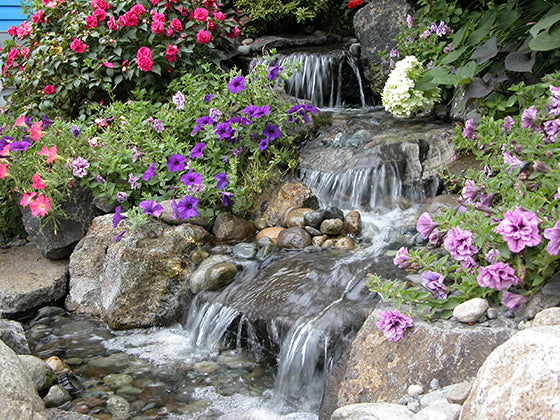
If you've been around the pond industry for a while, you may recognize this photograph.
A four-tier waterfall disappears into a bed of rock and gravel surrounded by blooming pink azaleas.

The photograph was later published in industry materials and product catalogs as the pondless waterfall concept was introduced to contractors, retailers and homeowners across the country.
But where was that waterfall built?
Who built it?
And where did the idea come from?
I'm John Russell, founder of Russell Watergardens. Aquascape has credited my company as the customer behind the original pondless waterfall concept they later introduced to the broader pond industry. This is the story of how that first pondless waterfall came to be—and what I learned from living with it.

It Started at Our Store in Redmond, Washington
Russell Watergardens opened its retail location in Redmond, Washington, in 2001 on a former three-acre tree and plant nursery.
My wife Pamela and I didn't want it to be a conventional pond store.
We wanted people to be able to see water features operating in the real world.
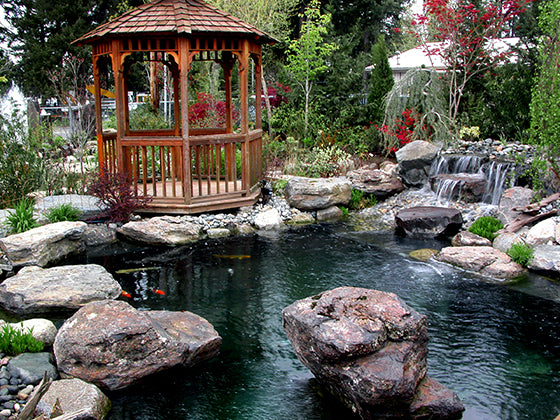
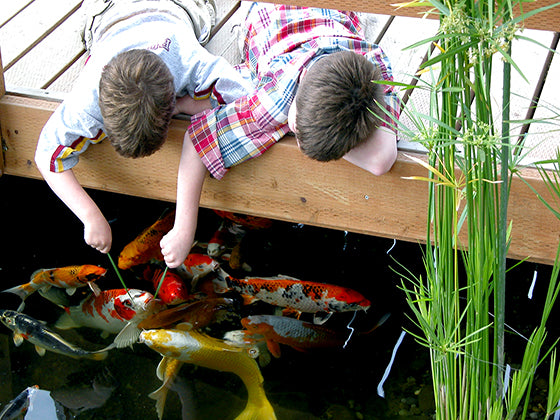
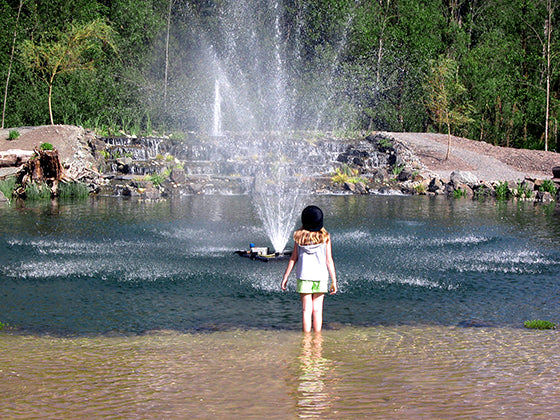
The property eventually contained dozens of ponds and water features of different sizes and styles, koi and other pond fish, aquatic plants, fountains, rock columns and a large lake stocked with trout.

We even constructed walk-through waterfalls.
The store became as much a place to experience water features as it was a place to buy the equipment to build them.
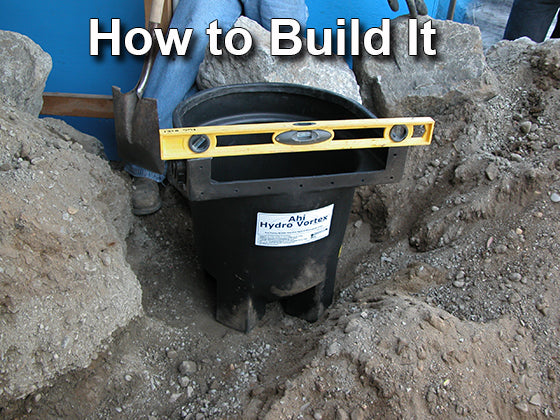
We also held regular “How to Build It” classes, where I taught homeowners and contractors how to construct ponds and water features.
And because I was constantly building things, I was also constantly experimenting.
Before the Pondless Waterfall Came Pondless Fountains

The idea didn't begin with a waterfall.
It began with fountains and rock columns.
I wanted to create water features where the water seemed to disappear rather than collect in a visible pond.
To make those early systems work, I constructed underground lined reservoirs using whatever practical materials were available to me at the time—including irrigation valve boxes, milk crates and homemade slotted pump vaults.
Water would disappear through rock and gravel into the reservoir below, where the pump would recirculate it back to the fountain or rock column.
We built numerous versions around the store.
Some were small.
Others were quite large.
And eventually I started wondering:
"If I can make a fountain disappear into the ground, why can't I do the same thing with a waterfall?"
So I tried it.
Building the Original Pondless Waterfall
The idea was actually pretty simple.
Take the basic disappearing-water reservoir concept I was already using beneath fountains and rock columns and apply it to a naturalistic waterfall.
But there was another unusual part of the idea.
At the head of the waterfall, I used an Aquascape Biofalls filter.
A Biofalls was intended to provide filtration for a pond.
My water feature didn't have a pond.
I was using a pond waterfall filter to create the head of a waterfall whose water would disappear into an underground reservoir at the bottom.
I began calling what I had built a:
“Pondless waterfall.”
The name described exactly what it was.
A waterfall.
Without a pond.
Repurposing Existing Equipment
Around this time, Aquascape had developed a bog-filtration component intended for a different application.
When I saw it, I immediately thought about my underground water-feature reservoirs.
Instead of using the milk crates and homemade slotted pump vault arrangements I had been experimenting with, I realized I could repurpose that component inside the reservoir of the pondless waterfall.
The finished feature had a four-tier waterfall beginning at the Biofalls and flowing downhill into a lined underground reservoir filled and concealed with rock and gravel.
The pump recirculated the stored water back to the top.
From above ground, you saw a natural-looking waterfall.
The pond had disappeared.

Sharing the Idea With Aquascape
At the time, Russell Watergardens was a significant Aquascape customer.
After building the feature, I shared what I had done with Aquascape's founder and explained how I had combined and repurposed the equipment to create the pondless waterfall.
Aquascape recognized the potential of the concept.
With my permission, the photograph of the waterfall we had built at Russell Watergardens—the one surrounded by the pink azaleas—was subsequently used in Aquascape promotional and product materials as the pondless waterfall concept was introduced to a much larger audience.
Aquascape had something Russell Watergardens didn't have: National reach.
They were able to introduce the concept to contractors, retailers and consumers throughout the country.
And people understood the appeal immediately.
You could have the sound, movement and beauty of a waterfall without having an open pond at the bottom.
The idea took off.
A New Water-Feature Category Emerged
As demand grew, pondless waterfall equipment became available throughout the pond industry.
Different manufacturers developed their own versions of underground reservoirs, pump vaults and waterfall components.
What had begun for me as an experiment at our Redmond store had become an established category of landscape water feature.
That could have been the end of the story.
It wasn't.
Because I had a problem with the pondless waterfall I had built. I hated cleaning it.

The Problem Was Underneath the Waterfall
Look closely at the original photograph.
At the bottom of the waterfall is a bed of rock and gravel.
Underneath it is the water reservoir.
At the time, that seemed like an effective solution. The rock concealed the reservoir, and the water disappeared naturally between the stones.
But our store was located in the Pacific Northwest.
And we were surrounded by fir trees.
That meant fir needles.
Lots and lots of fir needles.

The needles landed in the waterfall and stream, and the flowing water carried them downstream into the rock-and-gravel reservoir.
I tried removing them with leaf blowers.
I tried shop vacuums.
Those methods could remove material lying on top of the rocks.
They couldn't easily remove the material that had already worked its way down between them.
And the waterfalls continually helped carry debris deeper.
I Had Created a Problem I Didn't Like Living With

Eventually I discovered the uncomfortable truth about my own design:
I had created a beautiful water feature with a reservoir I didn't enjoy cleaning.
Once debris became trapped down inside the rock and gravel, getting it back out could become a very hands-on job.
I know because I was the person doing it.
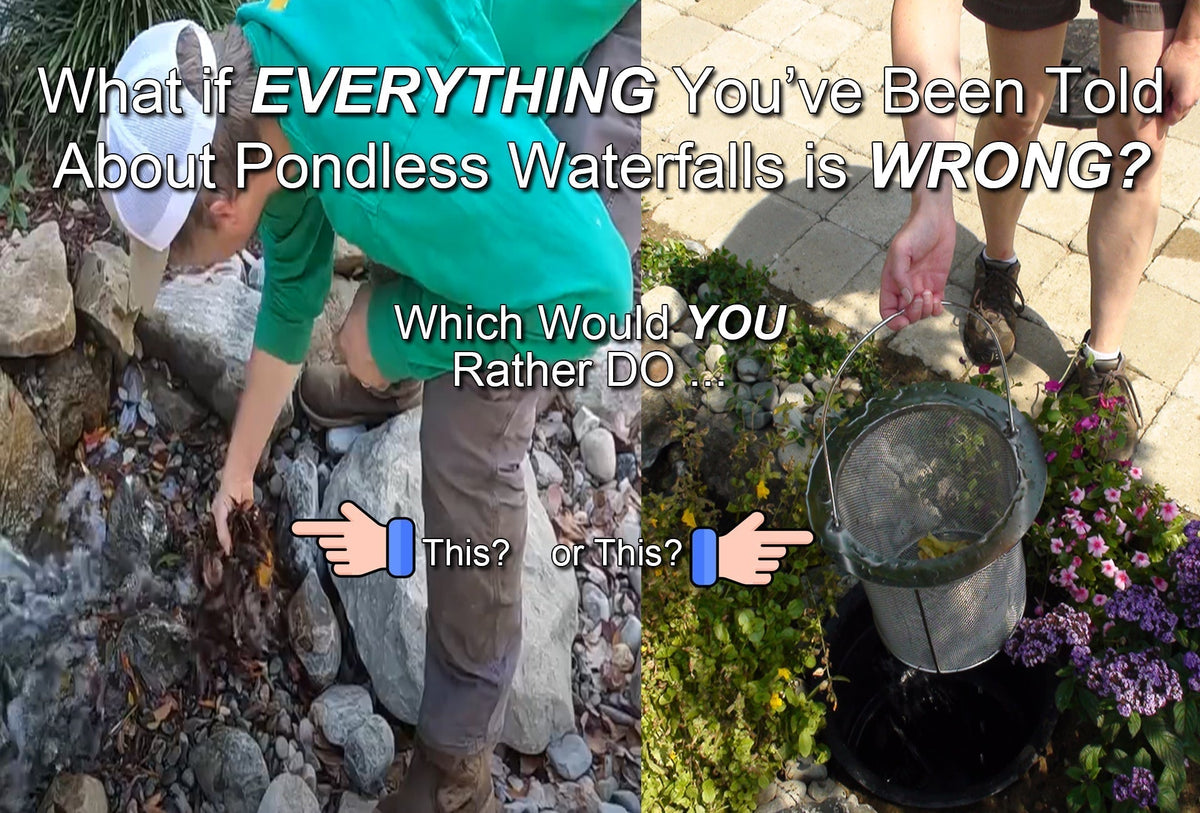
The photograph from those days showing my hand down among the rocks trying to pull fir needles and debris from the reservoir.
That photograph may actually be as important to the story as the beautiful photograph of the original waterfall.
One shows why people fell in love with pondless waterfalls.
The other shows what made me start rethinking them.
“How Do I Clean It?”

That experience changed the way I looked at pondless waterfall design.
Instead of asking only:
"How do I make the water disappear?"
I started asking another question:
"How do I clean it?"
That question eventually became far more important.
Every outdoor water feature collects debris.
Leaves.
Seeds.
Blossoms.
Fir needles.
Dust.
Pollen.
Insects.
Organic material.
You can't prevent all of it from entering the water.
So I began thinking less about hiding the reservoir and more about controlling where the debris goes.
The Original Design Wasn't the Final Design
There's something I find particularly interesting about the history today.
I developed the original rock-and-gravel pondless waterfall concept.
But I haven't recommended building pondless waterfalls that way in decades.

Why?
Because I had to maintain one.
Real-world experience changed my thinking.
Instead of defending the original design simply because I had created it, I wanted to solve the problems I discovered after living with it.
That eventually led Russell Watergardens in an entirely different direction.
From Pondless Waterfall to HydroPure™
Over the years, we developed equipment specifically to make pondless water features easier to own and maintain.
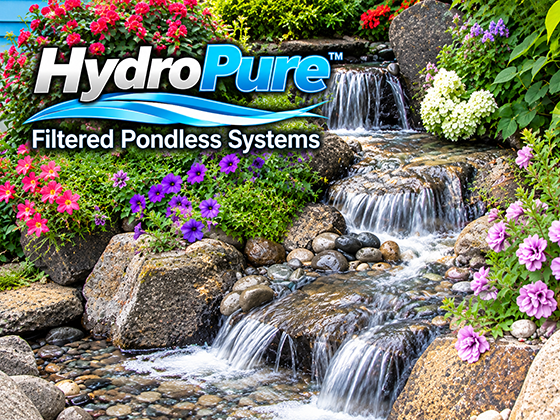
That work ultimately became today's HydroPure™ Filtered Pondless Systems.
Rather than using the underground water-storage area as a place where debris can accumulate among rock and gravel, HydroPure™ separates the jobs of debris collection, water storage, pump access and filtration.
The HydroSieve™ captures larger debris before it reaches the pump.
The HydroChamber™ provides water storage and direct pump access.
The Hydro Vortex™ provides backwashable filtration before returning water to the waterfall.
Instead of asking:
How much debris can we hide underground?
The system is designed around a different question:
How easily can we remove it?

Easy to Clean Became the Goal
Looking back, the original pondless waterfall and today's HydroPure™ systems represent two very different stages of the same journey.
The first solved one problem:
How can we build a waterfall without a pond?
The systems that followed were driven by another:
How can we make that pondless waterfall easier to own?
That second question has influenced nearly everything we've designed since.
It's why Easy to Clean became much more than a marketing phrase for us.
It became a design principle.
Sometimes Inventing Something Means Rethinking It
I'm proud that the original pondless waterfall we built at our Redmond store helped launch what eventually became an entirely new category of water feature.
But I'm equally proud that we didn't stop there.
Building something teaches you one set of lessons.
Owning it, cleaning it and living with it teaches you another.
The original pondless waterfall taught me both.
And nearly three decades later, we're still asking the same kind of question we were asking back then:
Can we make this better for the person who owns it?
That's the story behind the original pondless waterfall—and why the pondless systems we build today are so different from the one that started it all.
[ EXPLORE HYDROPURE™ PONDLESS SYSTEMS ]