



How a Hybrid Pond™ Combines:
Water Garden Beauty with Koi Pond-Inspired Design

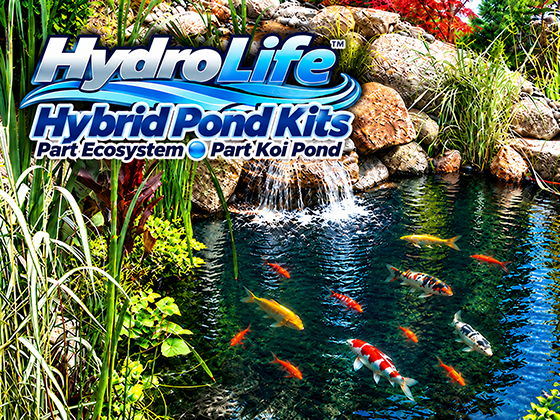
A Hybrid Pond™ is an original Russell Watergardens pond concept created to bridge the design gap between a Water Garden Pond and a dedicated Koi Pond.
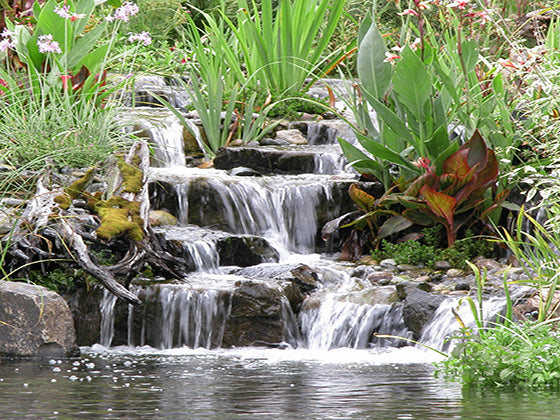
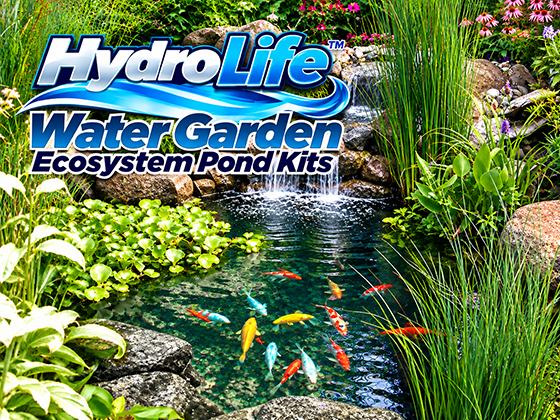
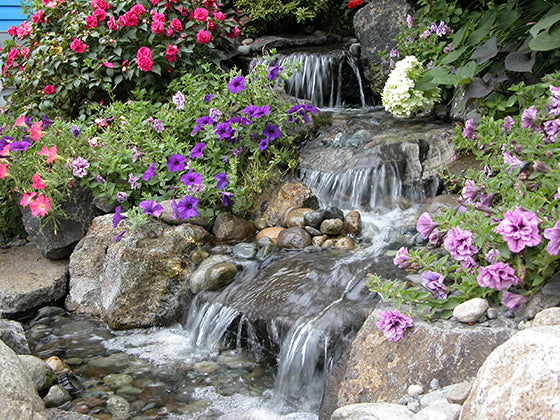
A Water Garden Pond emphasizes natural beauty with waterfalls, boulders, aquatic plants and landscaping.
A dedicated Koi Pond emphasizes deeper water, an unobstructed interior, efficient circulation, bottom-drain waste removal and advanced filtration.
The Hybrid Pond™ intentionally combines characteristics of both.
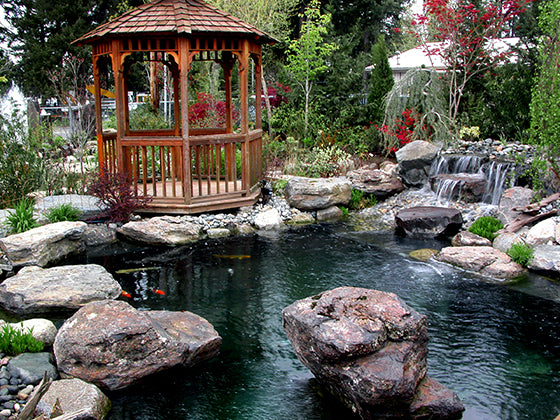
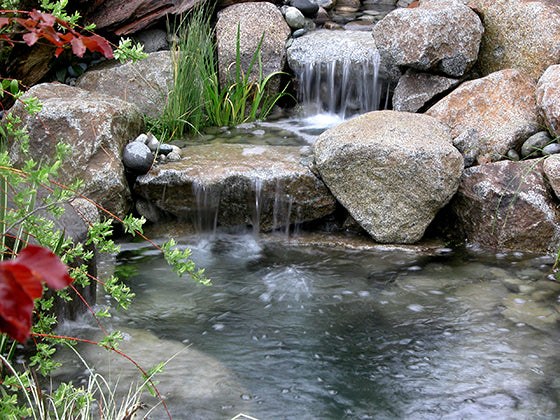
From above the water, it can have the natural appearance of a Water Garden Pond.
Below the surface, however, you'll find a deeper pond, a smooth rock-and-gravel-free bottom, bottom-drain pre-filtration and carefully planned circulation designed to move debris out of the pond.
Natural above. Purposeful below.
The Basic Hybrid Pond™ Design
Although every project can be customized, a Hybrid Pond™ follows several important design principles:
- Minimum water depth of approximately 3 feet, with deeper designs possible
- One narrow perimeter marginal plant shelf
- Deep central swimming area
- Natural boulders used to retain and naturalize submerged pond walls
- No rock or gravel covering the pond bottom
- Smooth pond floor sloped toward a bottom drain
- Aquatic plants contained in baskets
- Surface skimming
- Bottom-drain pre-filtration
- Backwashable biological filtration
- UV clarification
- External aeration
- Submerged circulation designed to help move debris toward the bottom drain
These aren't simply individual features added to a Water Garden Pond.
Their placement and interaction are what make the Hybrid Pond™ a complete system.
One Plant Shelf. More Deep Water.
Traditional Water Garden Ponds commonly use a series of stair-step shelves around and throughout the pond.
A Hybrid Pond™ uses a different profile.
A single, relatively narrow marginal shelf—typically about 12 inches wide—provides space for aquatic plants around selected portions of the perimeter.
After that shelf, the pond transitions into the deeper central area.
The result is more open swimming space and considerably greater water depth while retaining the ability to incorporate aquatic plants into the landscape.
Depending on the plants selected, the shelf depth can vary to accommodate marginal plants and water lilies.
Boulders at the Walls — Not Across the Bottom
All in-ground ponds need a way to maintain the shape of the excavation.
Dedicated Koi Ponds often accomplish this with structural walls outside the waterproofing membrane.
Naturalistic Water Garden Ponds commonly use large boulders inside the liner to retain and naturalize the excavated walls.
The Hybrid Pond™ borrows from the Water Garden Pond approach.
Carefully selected boulders are incorporated along the submerged perimeter, creating the natural appearance of a landscaped pond while helping retain and conceal the pond walls.
But the boulders do not continue across the pond floor as a layer of rock or gravel.
The main pond bottom remains smooth and unobstructed.
That's an important distinction.
A Bare Bottom Sloped Toward the Bottom Drain
The Hybrid Pond™ borrows one of its most important principles from dedicated Koi Pond construction.
The bottom is left free of rock and gravel and is shaped to encourage sinking material toward a bottom drain.
Fish waste, waterlogged leaves and other sinking debris can then leave the pond through the bottom-drain system rather than being intentionally trapped among submerged gravel.
The bottom drain connects to a HydroSieve™ pre-filter, where larger solids are separated from the circulating water and collected somewhere accessible.
The principle is simple:
Move debris out of the pond and into equipment designed for its removal.
Two Debris Zones. Two Collection Systems.
A pond collects debris at both the surface and the bottom.
A Hybrid Pond™ addresses them separately.
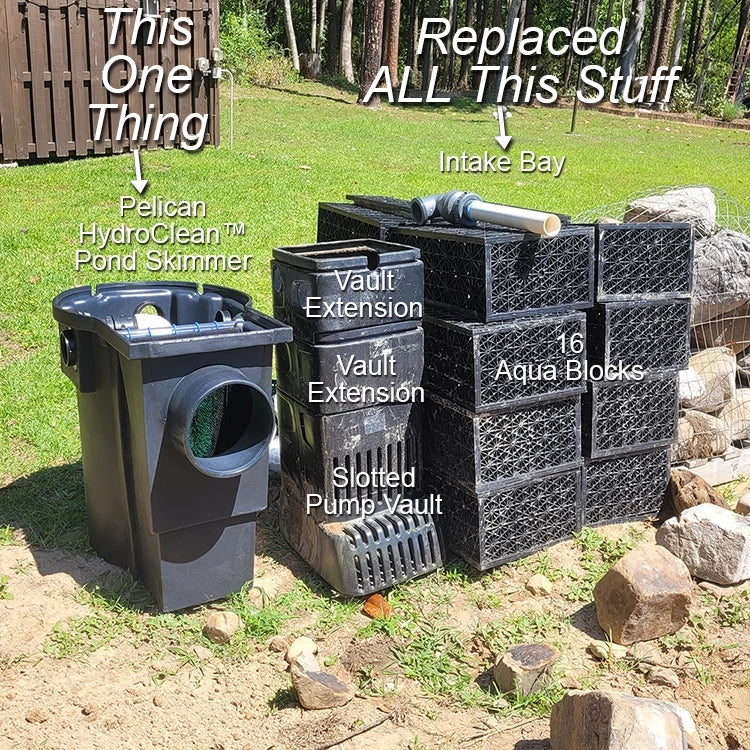
Surface Debris — HydroClean™ Pond Skimmer
Leaves, blossoms, pollen and other floating debris are drawn toward a HydroClean™ pond skimmer.
The skimmer removes this material before it becomes waterlogged and sinks.
Sinking Debris — Bottom Drain + HydroSieve™
Material that reaches the pond floor is encouraged toward the bottom drain.
From there, it travels to the HydroSieve™, where larger solids can be captured and removed before continuing through the circulation system.
Together, these two collection points allow the system to address debris throughout the water column.
Circulation Is Part of the Design
One of the most important differences between simply adding equipment to a pond and designing a complete pond system is circulation.
In a Hybrid Pond™, the location of the skimmer, waterfall, bottom drain, aeration and submerged returns is intentional.
We want water moving across the surface and through the deeper portions of the pond.
That circulation helps transport debris toward the equipment designed to remove it.
Surface Circulation
At one end of the pond, the HydroClean™ skimmer draws surface water from the pond.
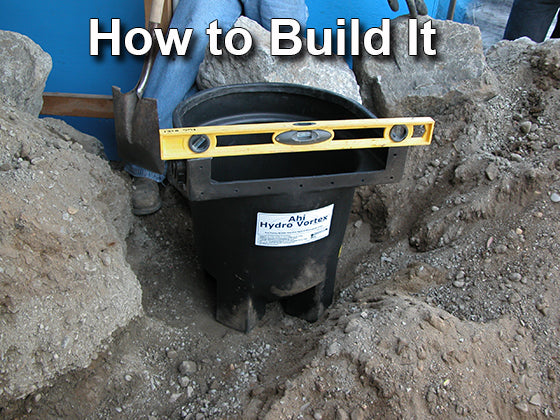
At the opposite end, the Hydro Vortex™ waterfall returns filtered water.
This establishes movement across the pond surface toward the skimmer.
Floating leaves and other debris aren't simply waiting for chance circulation to bring them to the skimmer.
The pond itself is designed to help move them there.
Bottom Circulation
The deeper portion of the pond requires its own circulation strategy.
A submerged water return is positioned near the shallower end of the pond and directed across the lower portion of the pond toward the bottom drain.
This return can be supplied by the UV clarification circuit.
Instead of returning all circulating water at the surface, a portion is intentionally returned underwater.
The objective is to create gentle directional movement through the deeper water and help transport settling debris toward the bottom drain.
Aeration That Works With the Circulation
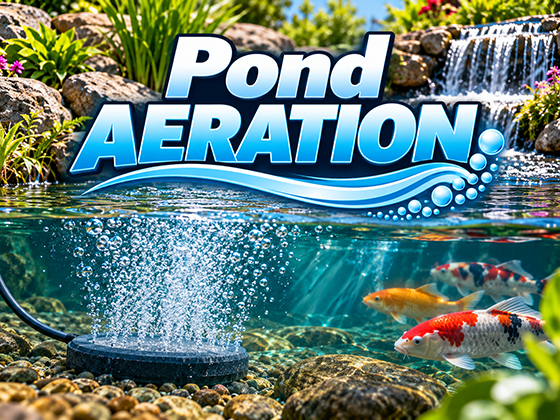
External aeration provides additional oxygen and creates another useful water current.
The air diffuser is positioned in the deeper area near the waterfall and bottom-drain end of the pond.
As bubbles rise, they carry surrounding water upward with them.
That upward movement encourages replacement water to move through the lower portions of the pond toward the rising column.
The aeration system therefore performs two jobs:
It adds oxygen while also contributing to circulation.
And there's another benefit to its location.
Hiding the Aeration in the Waterfall
Many pond owners like the benefits of aeration but don't necessarily want the visual appearance of a column of bubbles in the middle of their natural-looking pond.
That's why the Hybrid Pond™ positions aeration near the waterfall.
The surface disturbance created by the rising bubbles visually blends with the turbulence and splash of the waterfall.
The aeration remains functional while becoming less visually prominent.
It's a small detail, but it's a good example of Hybrid Pond™ thinking:
Engineering shouldn't unnecessarily compromise the natural appearance of the pond.
Hydro Vortex™ Biological Waterfall Filtration
A Hybrid Pond™ retains one of the most attractive characteristics of a Water Garden Pond—the waterfall.
But the waterfall is also part of the filtration system.
The Hydro Vortex™ biological waterfall filter provides biological filtration before returning water to the pond as a waterfall.
Its FilterSilk™ media is designed to remain inside the filter during routine cleaning, and the filter can be drained, rinsed and backwashed rather than routinely dismantled.
With the optional HydroFlush™ Backwash System, the filter can be backwashed as part of regular pond maintenance.
This allows the waterfall to be both an important visual feature and a functional component of the filtration system.
UV Clarification
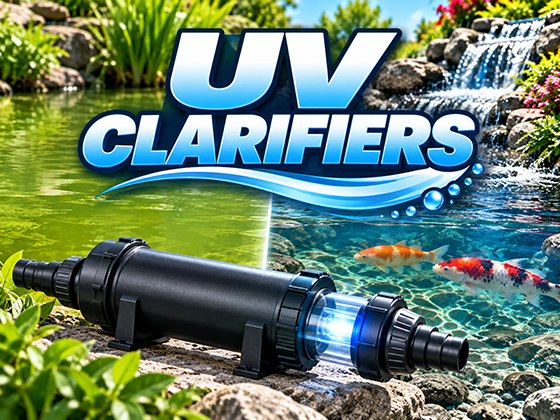
A Hybrid Pond™ also incorporates UV clarification to help control free-floating algae responsible for green water.
Rather than viewing the UV simply as another piece of equipment, its return water can become part of the pond's circulation strategy.
The UV return is directed into the lower portion of the pond, helping create movement toward the bottom-drain end.
One component. More than one job.
That's another principle we use throughout Hybrid Pond™ design.
Aquatic Plants Without a Gravel Bottom
Aquatic plants are one of the characteristics that give a Water Garden Pond its natural beauty.
Hybrid Ponds™ retain them.
But instead of planting into gravel covering the pond floor, plants are kept in aquatic plant baskets positioned on the marginal shelf.
Their roots still have access to pond water and nutrients while the baskets keep the planting material contained.
This lets the pond incorporate lilies and marginal plants without sacrificing the smooth, unobstructed main pond bottom.
How the Complete Hybrid Pond™ System Works
A properly configured Hybrid Pond™ uses several components working together:
HydroClean™ Pond Skimmer
Removes floating debris and draws water across the pond surface.
Bottom Drain
Collects water and sinking material from the deepest portion of the pond.
HydroSieve™ Pre-Filter
Separates larger bottom-drain debris before it reaches downstream equipment.
External Pump
Provides efficient circulation through the filtration system.
Hydro Vortex™ Biological Waterfall Filter
Provides biological filtration and returns water to the pond through the waterfall.
HydroFlush™ Backwash System
Allows the Hydro Vortex™ to be routinely backwashed.
UV Clarifier
Helps control green water while its submerged return contributes to lower-pond circulation.
External Aeration
Adds oxygen and contributes to vertical and bottom circulation.
The individual components matter.
But the real advantage comes from designing them to work together.
It's the Placement That Makes the System Work
A Hybrid Pond™ isn't simply a collection of pond equipment.
Component placement is intentional.
At one end:
HydroClean™ skimmer + submerged return
At the opposite end:
Waterfall + bottom drain + aeration
Between them:
A deeper, unobstructed pond bottom shaped toward the bottom drain
Above:
Surface circulation toward the skimmer
Below:
Submerged circulation toward the bottom drain
The result is a pond designed to continually move water and debris toward accessible filtration equipment.
Why No Gravel on the Bottom?
This is one of the most important characteristics of a Hybrid Pond™.
We don't cover the main pond bottom with gravel because we want sinking material to remain mobile.
A smooth bottom provides fewer places for waste and organic debris to become lodged and makes the floor part of the pond's waste-removal strategy.
This doesn't mean a Hybrid Pond™ can't look natural.
The natural appearance comes from boulders along the walls, aquatic plants, waterfalls and landscaping.
The bottom can remain clean and functional.
You can create the appearance of a natural pond without covering every underwater surface with rock.
What Makes a Hybrid Pond™ Different?
A Hybrid Pond™ isn't simply a deep Water Garden Pond.
And it isn't a Koi Pond with a few plants added.
It's a deliberately designed combination of characteristics from both.
From the Water Garden Pond, it takes:
- Natural boulders
- Aquatic plants
- A naturalistic waterfall
- Integration into the surrounding landscape
From the Koi Pond, it takes:
- Greater water depth
- An unobstructed bottom
- Bottom-drain waste removal
- Bottom-drain pre-filtration
- Submerged circulation
- UV clarification
- Supplemental aeration
The result is its own pond style.
Part Water Garden. Part Koi Pond. Completely Hybrid Pond™.
For homeowners who primarily want a traditional naturalistic pond, we offer Water Garden Pond Kits.
For those whose primary focus is dedicated koi keeping, we offer Koi Pond Kits.
And for people who find themselves looking at both and thinking:
I want some of each...
That's exactly why the Hybrid Pond™ exists.
[ LEARN WHAT A HYBRID POND™ IS ]
[ EXPLORE HYBRID POND™ KITS ]
[ COMPARE POND STYLES ]