
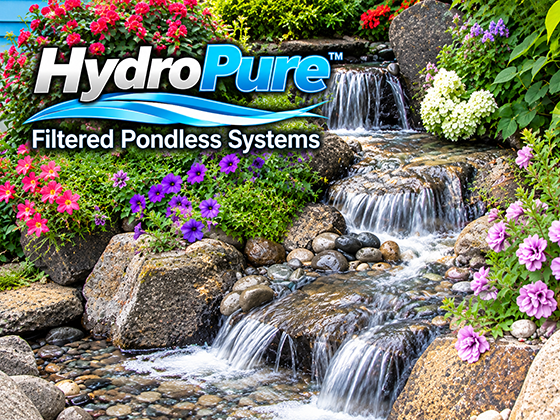



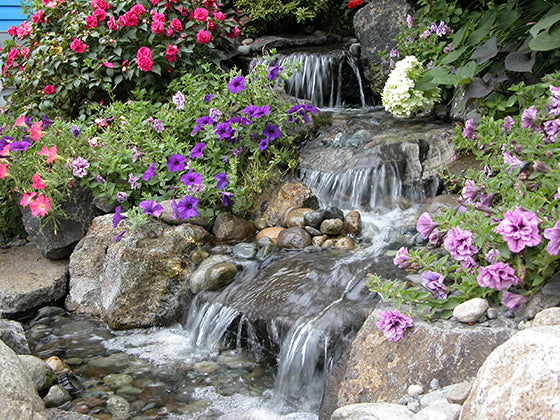




If you're researching pondless waterfalls, you've likely come across Aquascape systems. While they are widely known, not all pondless systems are built the same.
This guide explains the key differences between traditional pondless systems and newer fully filtered pondless waterfall systems—so you can make the right decision before you build.
How Traditional Pondless Systems Work
Most traditional pondless waterfalls use:
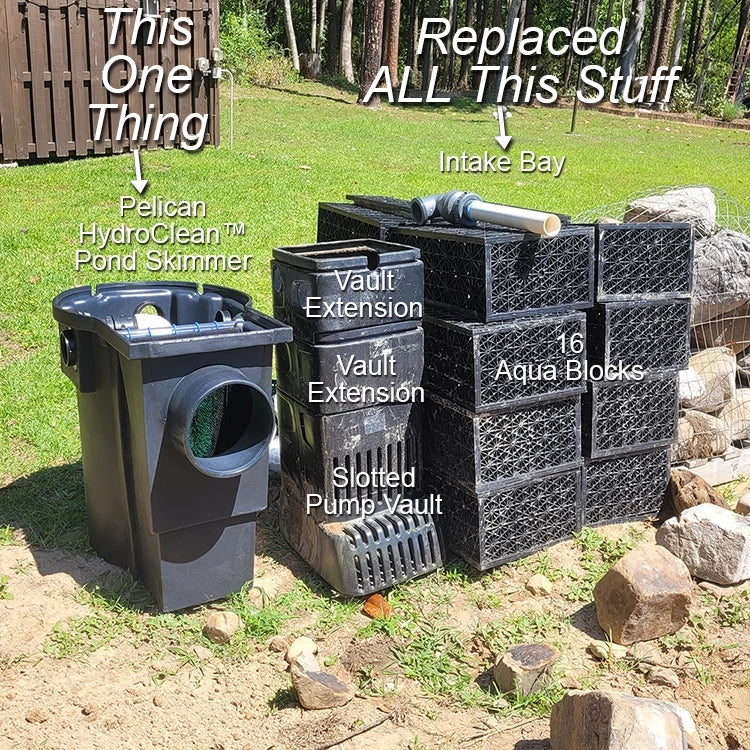
- A rock and gravel basin to store water
- A slotted pump vault buried underground
- Minimal or no true filtration
Water flows into the basin, collects debris, and recirculates back through the system.
The Problem with Rock & Gravel Reservoirs
While simple, this design creates long-term issues:
- Debris gets trapped underground
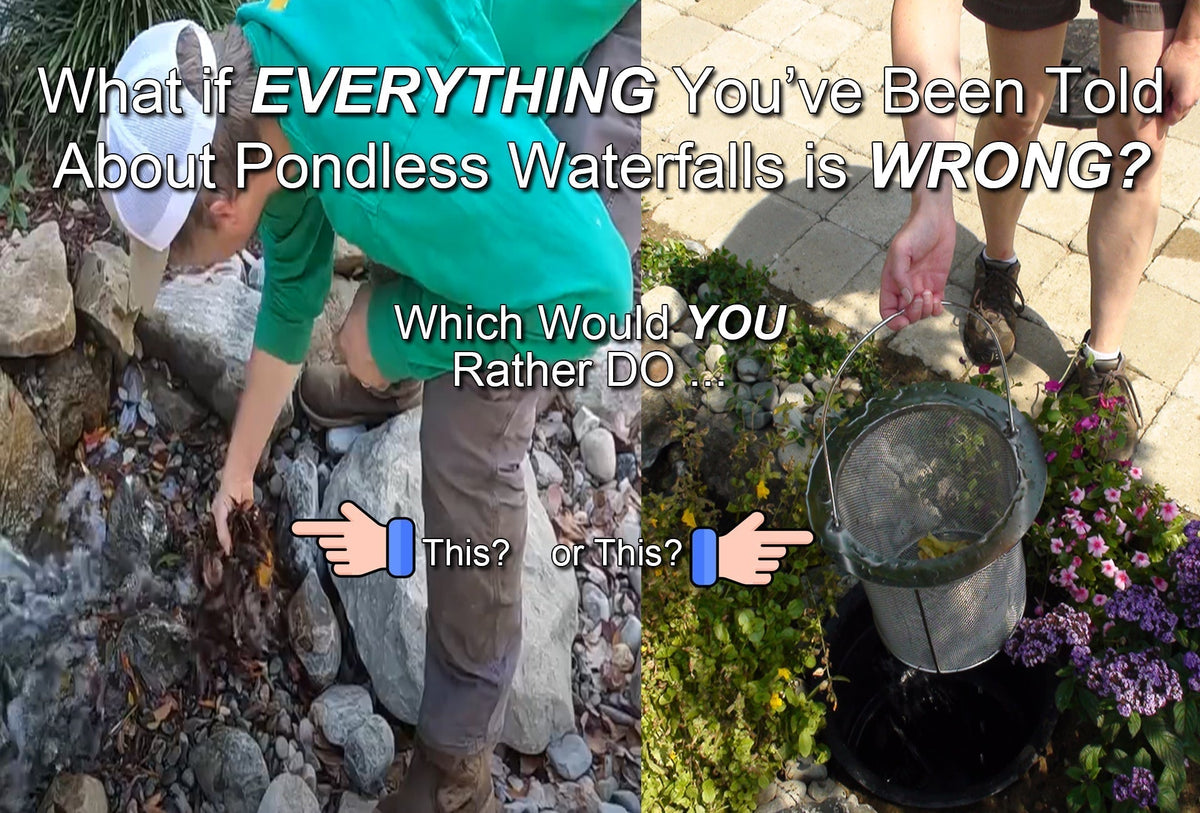
- Reservoirs are difficult to clean
- Organic buildup leads to poor water quality
- Maintenance often requires partial teardown
Over time, many homeowners experience reduced flow, dirty water, excessive algae growth, and increased maintenance.
A Better Approach: Fully Filtered Pondless Systems
Modern systems—like the ULTIMATE Pondless Waterfall System—solve these problems with:
- HydroSieve™ pre-filtration to remove debris early
- Hydro Vortex™ biological filtration for clean water
- HydroChamber™ water storage tank and pump vault
Instead of trapping debris underground, these systems are designed to remove and manage it efficiently.
Side-by-Side Comparison
| Feature | Traditional Systems | Fully Filtered Systems |
|---|---|---|
| Water Storage | Rock & gravel basin | Accessible tank |
| Filtration | Minimal | Pre + biological |
| Maintenance | Difficult | Easy |
| Cleaning | Often requires teardown | Backwash system |
| Water Quality | Can decline over time | Consistently clear |
Which System Is Right for You?
If you're looking for:
- Lower maintenance
- Cleaner water
- Long-term reliability
A fully filtered pondless systems is the better choice.