






Simple Routine Maintenance Without Draining or
Pressure-Washing a Gravel-Filled Reservoir
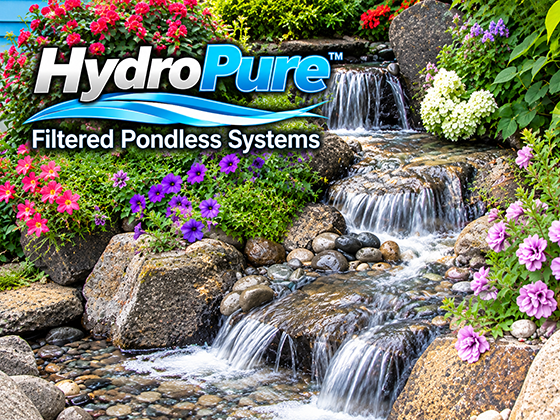
A beautiful pondless waterfall shouldn't be difficult to own.
That's one of the reasons we developed the HydroPure™ Filtered Pondless System differently.
Instead of allowing leaves, blossoms, seeds and other organic debris to work their way down into a rock-and-gravel-filled water reservoir, a HydroPure™ system is designed to capture debris where you can easily remove it.
The HydroSieve™ captures larger debris before it reaches the pump.
The HydroChamber™ provides clean-water pump access and water storage.
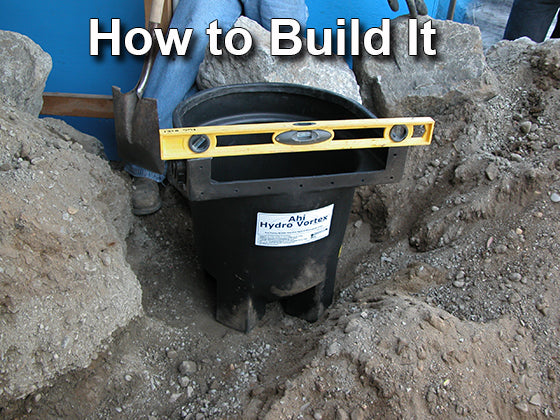
And the Hydro Vortex™ provides backwashable filtration before returning the water to your waterfall.
The result?
Routine cleaning is something you can do yourself—without dismantling your water feature.
How to Clean Your HydroPure™ Pondless Waterfall
For routine maintenance, there are three basic jobs:
Rinse the waterfall and stream.
Empty the HydroSieve™.
Backwash the Hydro Vortex™.
That's it.
Here's how.
Step 1: Rinse the Waterfall and Stream
Leave the waterfall pump running.
Using an ordinary garden hose, rinse leaves, blossoms, dust, pollen and other accumulated debris from the waterfall rocks and stream.
Work from the upper portion of the water feature downstream.
The flowing water carries the loosened material toward the HydroSieve™ pre-filter, where larger debris is captured in the stainless-steel basket.
You're not trying to remove the debris by hand as you work your way downstream.
You're moving it to the equipment designed to collect it.
Step 2: Empty the HydroSieve™
Turn off the waterfall pump.
Open the HydroSieve™ and lift out the stainless-steel debris basket.
Empty the collected material, rinse the basket with a garden hose if necessary, and place it back inside the HydroSieve™.
There is no need to remove the waterfall pump for routine cleaning.
The debris has been collected before it reaches the HydroChamber™ and pump. Pasted text
Step 3: Drain the Hydro Vortex™
Open the drain valve at the bottom of the Hydro Vortex™ waterfall filter.
Allow the filter to drain completely.
The water leaving the drain may initially be dirty. That's material the filter has removed from the circulating water.
Instead of remaining inside the water feature, it can now be discharged from the system.
Step 4: Backwash the Hydro Vortex™
The Hydro Vortex™ can be cleaned in one of two ways:
Manual Backwash
With the filter drain open, use an ordinary garden hose to rinse fresh water downward through the FilterSilk™ media.
Continue rinsing until the water leaving the filter drain runs clear.
When the drain water runs clear, close the drain valve.
HydroFlush™ Backwash
If your system includes the HydroFlush™ Backwash System, backwashing becomes even easier.
With the Hydro Vortex™ drain valve open, move the HydroFlush™ valve to the BACKWASH position.
Start the waterfall pump.
The HydroFlush™ redirects pump flow through the backwash jet at the upper portion of the Hydro Vortex™, distributing water through the FilterSilk™ media and flushing accumulated material toward the filter drain.
Continue until the drain water runs clear.
Then:
- Turn off the pump.
- Close the Hydro Vortex™ drain valve.
- Return the HydroFlush™ valve to the FILTER position.
- Restart the pump.
Your Hydro Vortex™ is ready to return to normal filtration. Pasted text
Step 5: Replace the Backwash Water
Backwashing removes a relatively small amount of water from the system.
If your HydroChamber™ is equipped with an automatic water-fill valve, it will replace that water automatically.
Otherwise, simply add the necessary replacement water with a garden hose.
Then restart the system and enjoy your waterfall. Pasted text
That's Routine HydroPure™ Maintenance
No reservoir to drain.
No matrix blocks to uncover.
No pump vault to dig down into.
No gravel-filled water reservoir to pressure wash.
No dismantling the water feature just to perform routine cleaning.
Rinse it. Empty it. Backwash it. Enjoy it.
Why HydroPure™ Is Easier to Clean
The difference begins with where the debris goes.
Every outdoor water feature collects debris.
Wind carries in leaves, seeds, blossoms and grass clippings.
Dust and pollen settle on the water.
Birds, insects and surrounding landscaping contribute additional organic material.
The question isn't whether debris will enter your pondless waterfall.
The question is: Where does it go after it gets there?
A HydroPure™ system is designed around that question.
Larger Debris Goes to the HydroSieve™
Water from the stream enters the HydroSieve™ pre-filter.
Leaves, blossoms, seeds and other larger debris are captured in its removable stainless-steel basket.
Instead of allowing that material to travel into the underground water-storage area, the HydroSieve™ keeps it somewhere accessible.
Lift the basket.
Empty it.
Put it back.
Pre-Filtered Water Goes to the HydroChamber™
After passing through the HydroSieve™, pre-filtered water flows through the 4" connection into the HydroChamber™.
The HydroChamber™ combines water storage and pump access in one underground chamber.
Because larger debris has already been removed, the pump operates in pre-filtered water rather than sitting inside a reservoir intentionally filled with rock and gravel.
And when you need access to the pump, you can reach it directly through the HydroChamber™ lid.
Finer Material Goes to the Hydro Vortex™
The pump sends water from the HydroChamber™ to the Hydro Vortex™ waterfall filter.
Inside the Hydro Vortex™, FilterSilk™ media provides additional filtration before the water returns to the waterfall.
Accumulated material can then be removed through the filter's drain during routine cleaning and backwashing.
The Hydro Vortex™ doesn't have to be dismantled for normal maintenance.
The debris is collected where you can remove it.
That principle is at the heart of the entire HydroPure™ system.
How Often Should You Clean a HydroPure™ Pondless Waterfall?
There isn't one maintenance schedule that applies to every water feature.
A pondless waterfall beneath large deciduous trees will collect debris faster than one in an open landscape.
Season, weather, surrounding vegetation and how pristine you want the feature to look will also affect cleaning frequency.
That's why HydroPure™ gives you control.
You can empty the HydroSieve™ whenever necessary.
You can rinse the waterfall and stream whenever debris becomes noticeable.
And you can backwash the Hydro Vortex™ as conditions require.
Maintenance can be performed when the water feature needs it—not because the entire reservoir has finally become dirty enough to require a major clean-out.
HydroPure™ vs. a Gravel-Reservoir Pondless Waterfall
This is where I would replace almost the entire old comparison section.
The old page quotes an internet search result and then responds point-by-point. Pasted text I don't think you need that anymore.
Instead, I would use this:
Before You Buy a Pondless Waterfall, Ask One Question:
“How Do I Clean It?”
Two pondless waterfalls can look nearly identical above ground.
The important difference may be what's underneath them.
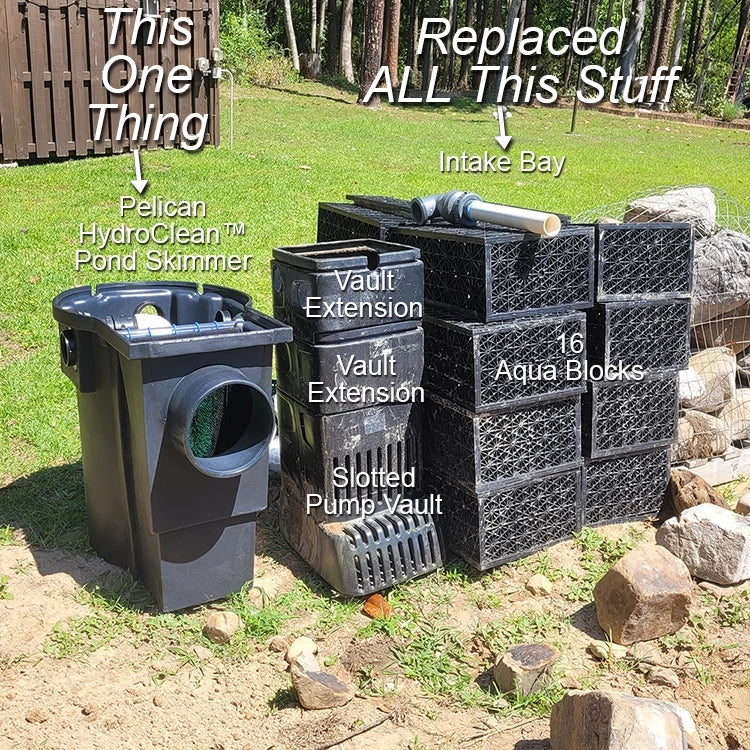
A conventional rock-and-gravel reservoir commonly stores water beneath the feature using underground structural blocks or similar water-storage components surrounded by rock, with the pump accessed through a pump vault.
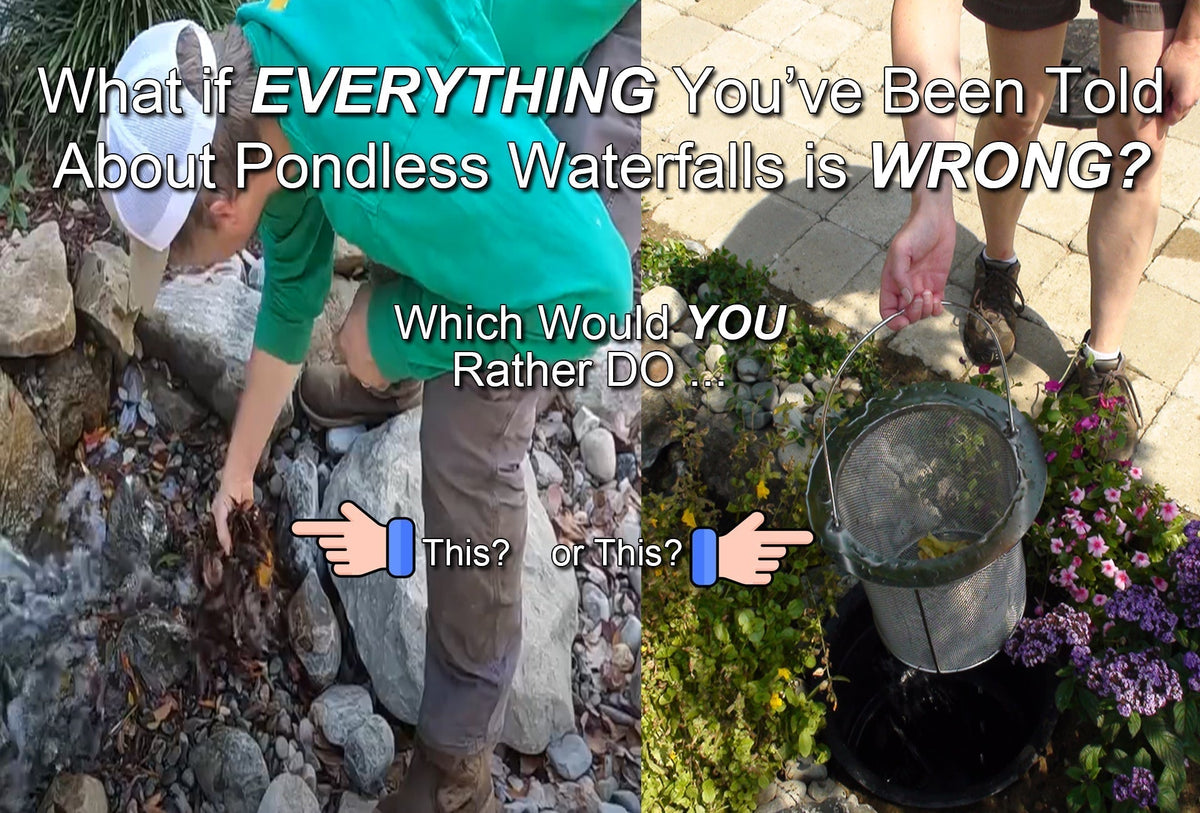
Organic debris carried downstream can become trapped among the rock and gravel.
Cleaning accumulated material from that type of reservoir may require considerably more access to the reservoir itself.
HydroPure™ takes a different approach.
Instead of relying on a gravel-filled water reservoir to collect material, it gives debris specific places to go:
Large debris → HydroSieve™
Pre-filtered water → HydroChamber™
Finer suspended material → Hydro Vortex™
Collected waste → Out of the system
That's why we say:
Don't hide debris. Remove it.
Compare the Routine Maintenance
| HydroPure™ Filtered Pondless System | Gravel-Reservoir Pondless System |
|---|---|
| Rinse waterfall and stream | Rinse waterfall and stream |
| Empty accessible HydroSieve™ basket | Remove accessible surface debris |
| Backwash Hydro Vortex™ | Accumulated debris may need to be removed from rock and gravel |
| Pump remains accessible in HydroChamber™ | Pump is typically accessed through a pump vault |
| No gravel-filled water reservoir | Water stored within a rock/gravel reservoir |
| No routine reservoir pressure washing | Periodic deeper reservoir cleaning may be necessary depending on design and debris accumulation |
Both systems can create a beautiful pondless waterfall.
The difference becomes obvious when it's time to clean them.
Easy Maintenance Is Designed Into the System
We don't believe maintenance should be an afterthought.
That's why the HydroPure™ system separates the functions of:
Debris collection
HydroSieve™
Water storage and pump access
HydroChamber™
Filtration and backwashing
Hydro Vortex™
Each component has a specific job.
And each was designed around something we think every pondless waterfall owner should be able to answer:
“How am I going to clean it?”
Before choosing any pondless waterfall system, compare the answer.
Because long after the installation is finished, you're the one who will own it.
[ EXPLORE HYDROPURE™ PONDLESS KITS ]
[ SEE HOW HYDROPURE™ WORKS ]
[ COMPARE PONDLESS SYSTEMS ]